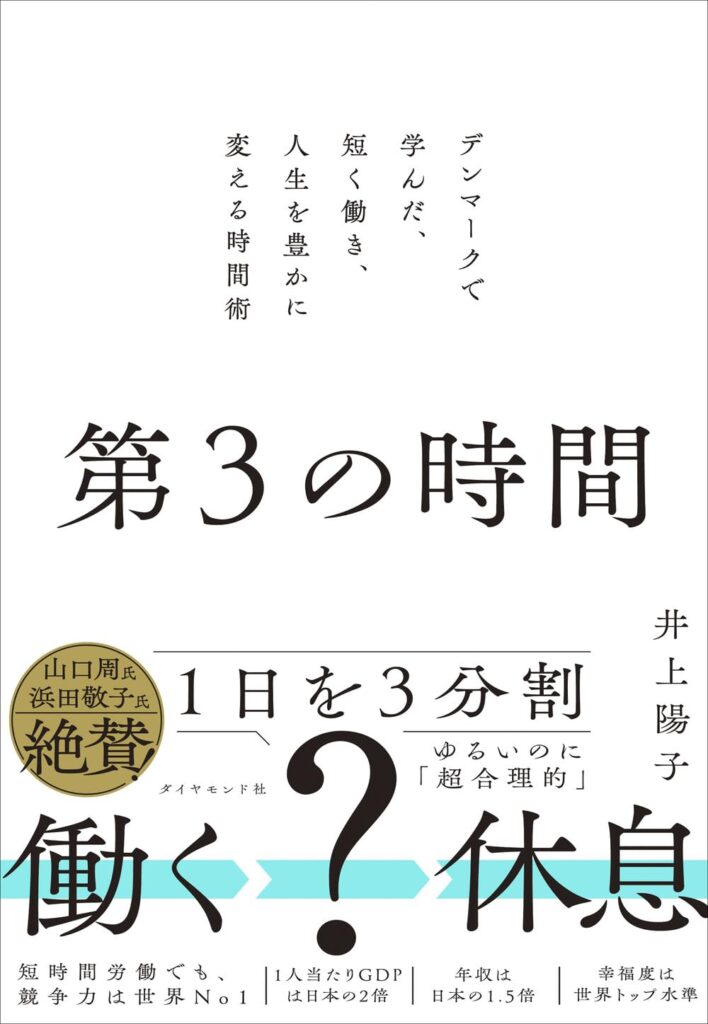

THE THIRD KIND OF TIME
Work, … , Rest
Represented by Annabel White
Perfect for fans of Michael Booth and Helen Russell, The Third Kind of Time is at once a social investigation and a moving story of a woman caught in the rat race, searching for an identity outside of her work. It challenges our modern-day obsession with productivity and would sit comfortably alongside titles such as Emma Gannon’s The Success Myth and Oliver Burkeman’s Four Thousand Weeks.
Yoko Inoue once lived the life of an overworked newspaper reporter in Tokyo, chasing as many as five daily deadlines. After becoming pregnant, she moved to Denmark and was shocked to discover a society where people work just 37 hours a week, leave the office at 4pm, and don’t work overtime.
Despite being a nation of seemingly ordinary people, Denmark was ranked the world’s most competitive country in 2022. How could this be? Struck by the stark contrast between Danes’ relaxed daily lives and their top-ranked global competitiveness, Inoue drew on her two decades of experience as a journalist to conduct in-depth interviews with economists, historians, policymakers, business leaders, working parents, and many more.
The effect this research had on Inoue’s personal life forms a big part of this book. Through these interviews and conversations, she starts to untangle her sense of self-worth and identity from her work.
In her own words, she says: “The story I tell in this book is not really about Denmark. It is about a deeper question: what role work, time, and life should play in our societies […] During my book tour in Tokyo last month, one of the greatest surprises was how many readers came up to me in tears, telling me how deeply the book resonated with them. Even now, a month after publication, I continue to receive messages like, ‘I struggled to hold back tears in a café.’ It made me feel that this story had touched something essential for people who have lived very work-centered lives.”